
Learning Beyond the Classroom: Occupational Health Field Trips Bring Real-World Safety to Life at UTHealth Houston
by Mehwish Martin, MD
At the UTHealth Houston School of Public Health, education in Occupational and Environmental Health does not stop at textbooks, lectures, or classroom discussions. One of the most dynamic and memorable learning experiences in the Occupational Health curriculum is the Occupational Health Field Trips course, a program designed to take students directly into the environments where workplace health and safety decisions truly matter.
This immersive course bridges the gap between theory and practice by allowing students to step inside real workplaces—ranging from advanced biomedical laboratories to emergency response facilities and industrial operations. Through structured site visits, expert mentorship, and guided analysis, students gain a firsthand understanding of how occupational hazards are identified, managed, and prevented across diverse industries.
A Classroom That Extends Into the Real World
Each field trip follows a thoughtful learning structure. Before visiting a site, students participate in a pre-field trip briefing and presentation in the classroom. These sessions introduce the facility, outline potential occupational hazards, review regulatory frameworks, and discuss the operational context of the workplace. Students learn what exposures to anticipate—whether biological agents, chemical hazards, ergonomic risks, or environmental stressors—and how professionals manage these risks in real time.
Following the visit, students return to the classroom for a post-trip analysis and discussion, where observations from the field are translated into occupational health insights. These reflective sessions encourage students to critically evaluate workplace controls, exposure pathways, and safety systems while integrating concepts from industrial hygiene, occupational medicine, toxicology, and regulatory science.
The result is a powerful learning cycle: prepare, observe, analyze, and apply.
Exploring the Front Lines of Occupational Health
This year’s field trips have taken students to some of the most fascinating and complex workplaces in the Houston region.
The students began with a visit to the UTHealth Environmental Health & Safety Department, where they learned how large academic medical centers maintain safe working environments across laboratories, clinics, and research facilities. Discussions focused on laboratory safety programs, chemical inventory systems, biosafety oversight, and emergency preparedness protocols.
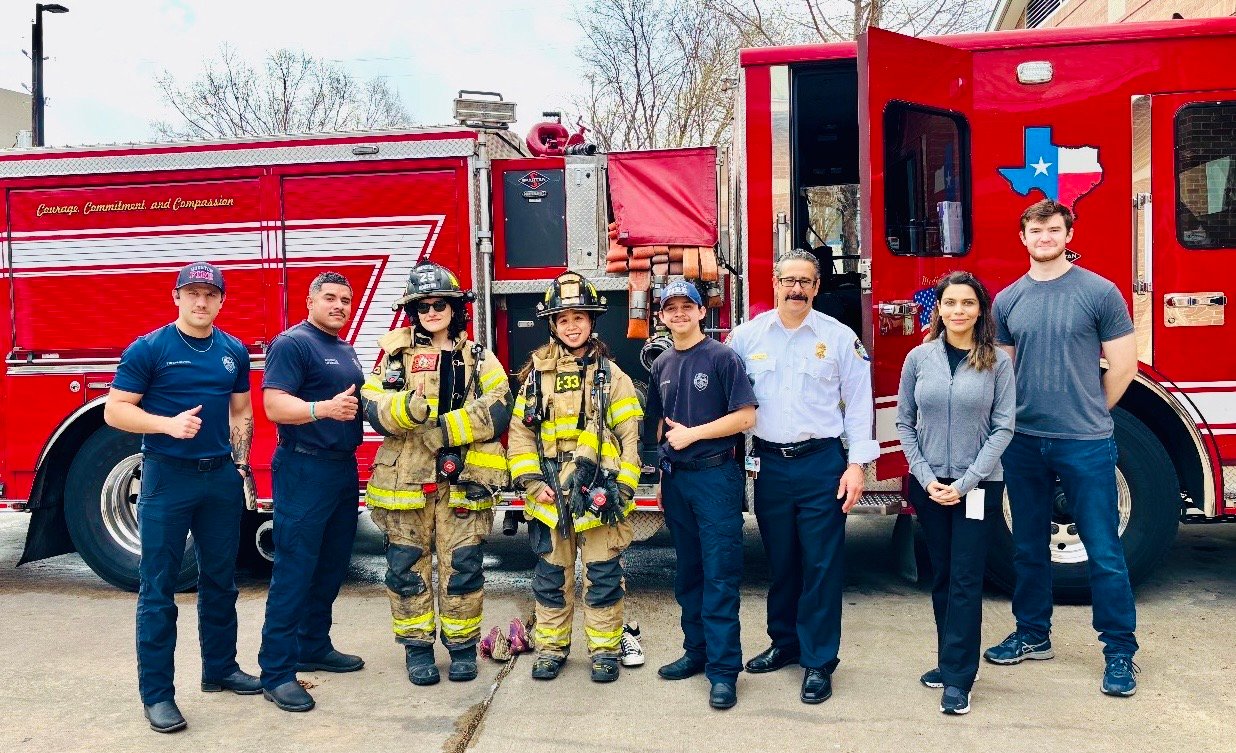
At the Houston Fire Department Station 33, students gained insight into the occupational realities of emergency responders. Firefighters discussed the physical demands of the profession, exposure to combustion products and toxic gases, heat stress risks, and the importance of protective equipment and rehabilitation protocols during active incidents. The visit provided a rare opportunity to understand occupational health from the perspective of first responders whose work environments can change in seconds.
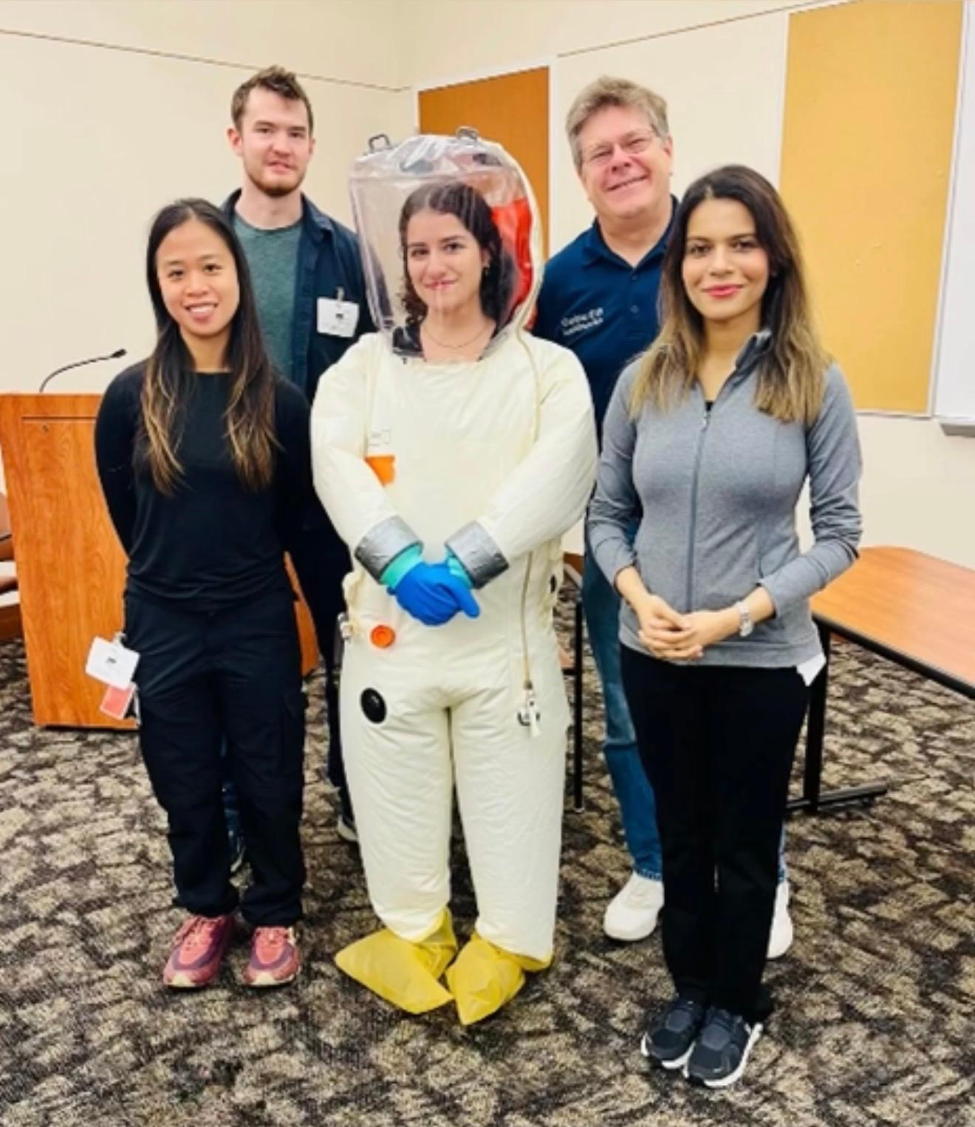
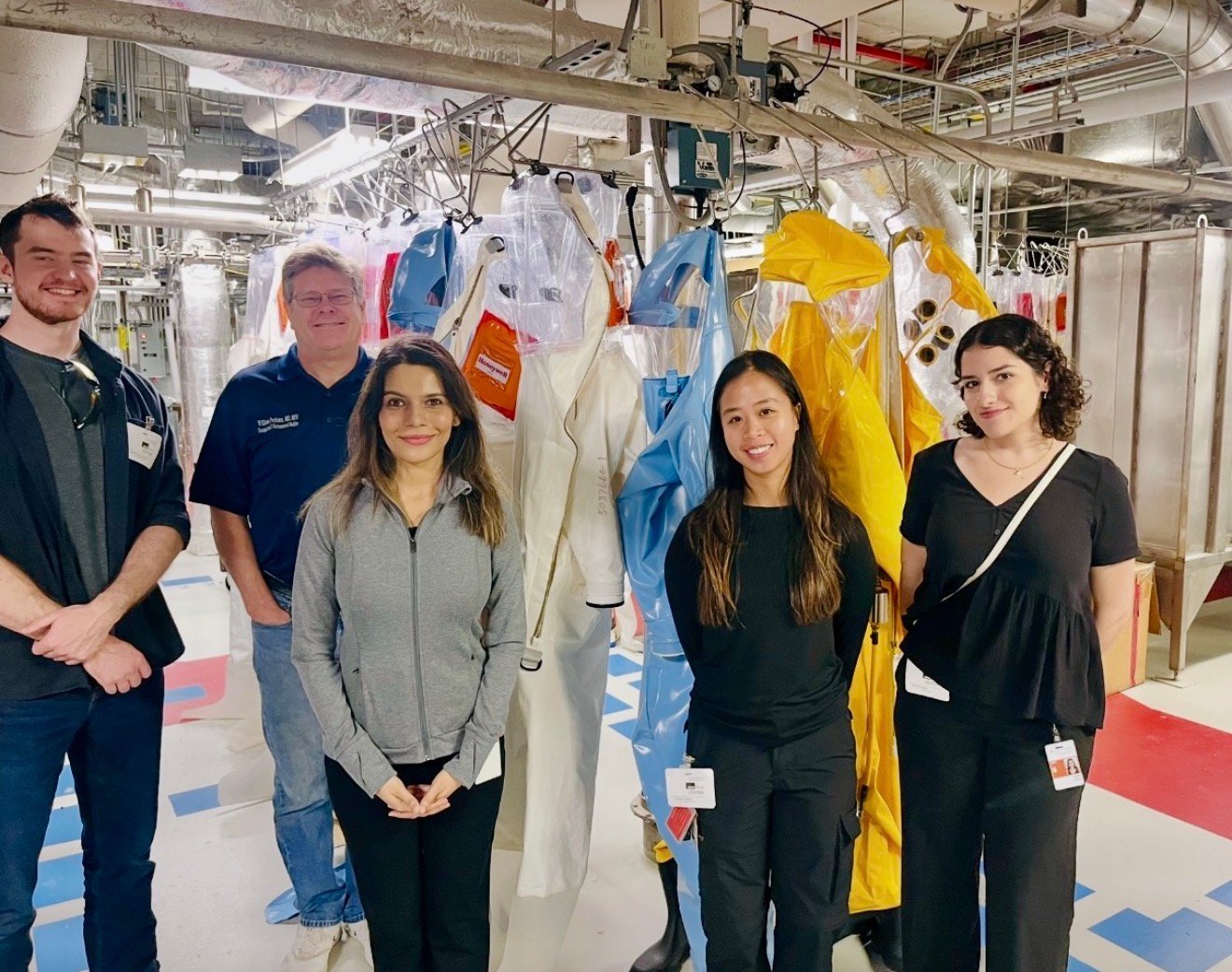
The class also toured the UTMB Galveston National Laboratory (GNL) and its Biocontainment Care Unit, one of the nation’s premier high-containment research and treatment facilities. Here, students explored the stringent biosafety infrastructure required for research involving high-risk pathogens. Experts demonstrated specialized personal protective equipment (PPE), air-handling systems, decontamination procedures, and infection control protocols that protect both workers and the public. The visit highlighted the complex interface between occupational health, biosafety, and global infectious disease preparedness.
At MD Anderson Cancer Center’s Environmental Health and Safety Department, students examined safety management within one of the world’s leading cancer treatment and research institutions. The visit emphasized hazard surveillance in clinical and laboratory settings, radiation safety, chemical handling procedures, and institutional approaches to maintaining worker protection in high-stakes healthcare environments.
The course also took students into industry with a visit to Lone Star Mushroom Farms, where occupational health takes on a different dimension. Agricultural production introduces unique hazards including organic dust exposure, microbial aerosols, humidity control challenges, ergonomic strain, and environmental exposures. Students observed how agricultural operations balance productivity with worker safety while maintaining strict environmental conditions required for mushroom cultivation.
Mentorship That Brings the Field to Life
A defining strength of the course is the mentorship provided by experienced occupational health professionals who guide each visit. Safety officers, industrial hygienists, physicians, and operational leaders generously share their expertise, offering students candid insight into how occupational health decisions are made in complex real-world settings.
These conversations often extend beyond hazard identification. Students learn about leadership in safety culture, interdisciplinary collaboration, regulatory compliance, and the evolving challenges of protecting workers in rapidly advancing scientific and industrial environments.
Learning That Is Both Rigorous and Memorable
While the educational value of the course is substantial, the experience is also uniquely engaging. Seeing the real-world application of occupational health principles—whether inside a fire station apparatus bay, a high-containment biosafety laboratory, or an agricultural facility—creates a level of understanding that simply cannot be replicated in a classroom alone.
Students consistently describe the course as one of the most memorable components of their training. It is intellectually rigorous, deeply practical, and, just as importantly, genuinely enjoyable. Each visit reveals a new dimension of the occupational health profession and reinforces the vital role that safety professionals play in protecting workers across industries.
Preparing the Next Generation of Occupational Health Leaders
Occupational health is a field defined by its impact on real lives and real workplaces. The UTHealth Houston Occupational Health Field Trips course reflects that reality by preparing students to think critically, observe carefully, and lead confidently in complex occupational environments.
By combining structured academic preparation, immersive site visits, and expert mentorship, the course provides an exceptional educational experience that equips students with the practical perspective needed to become future leaders in occupational and environmental health.
For many students, these field trips are more than just visits—they are a window into the diverse and fascinating world of occupational health, and a reminder that protecting worker health is both a scientific discipline and a public service.
And perhaps most importantly, along the way, students discover something unexpected: learning about workplace safety can be not only deeply meaningful—but also a great deal of fun.