
Advancing dementia research through the caregiver lens: Jiaming Liang
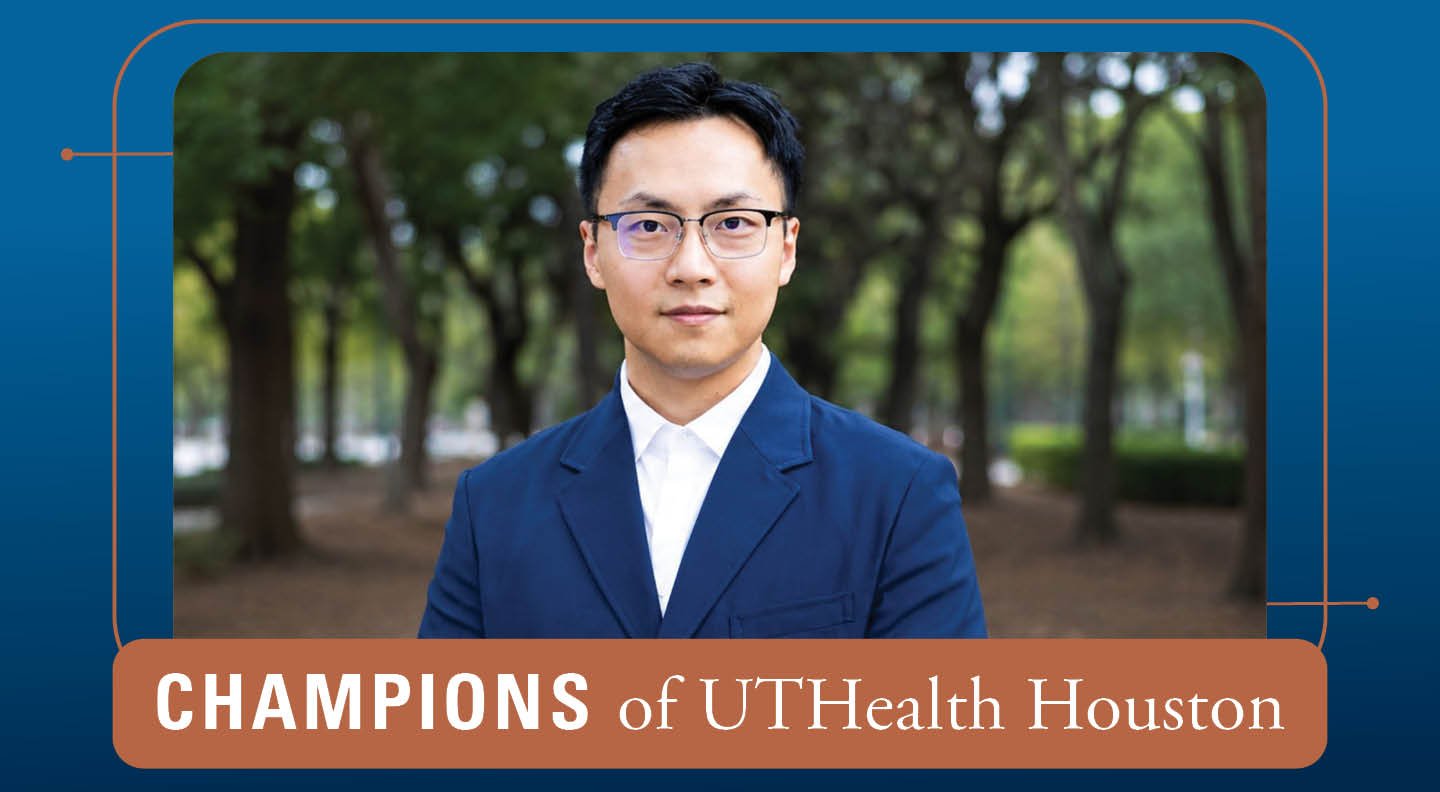
For Jiaming Liang, PhD, the path into dementia research did not begin in a lab, but in a deeply personal place. Witnessing a family member live with the devastating effects of dementia left a lasting impression, one that would ultimately shape his career and drive his commitment to improving care for others facing the same reality.
Today, Liang is an assistant professor at UTHealth Houston School of Public Health, where his work focuses on one of the most complex and often overlooked aspects of Alzheimer’s disease and related dementias: the experiences of caregivers. His research examines the emotional, social, and behavioral challenges faced by families, as well as the systems that support them.
“Family caregivers are often the people who notice changes first, manage daily challenges, and help translate those experiences into care decisions,” he said. “My work focuses on how we can better support them, not only as helpers, but as people whose own needs and well-being matter.”
That mission has earned him national recognition. Liang was named a 2026 Faculty Scholar by the National Institute on Aging’s IMPACT Collaboratory, a prestigious program designed to prepare researchers to lead embedded pragmatic clinical trials aimed at improving care for people living with dementia and their care partners.
For Liang, the honor represents more than professional advancement. It is an opportunity to accelerate meaningful, real-world change. Embedded pragmatic clinical trials focus on testing interventions in everyday healthcare settings, helping ensure that research findings translate directly into better real-world dementia care delivery.
Research rooted in real life
Liang’s work is grounded in the understanding that dementia does not affect individuals in isolation—it reshapes entire families. His research explores caregiving stress, the dynamic relationship between patients and caregivers, and the barriers that limit access to quality care, particularly among underserved populations.
He also brings an interdisciplinary lens to the field, combining community-based research with health system approaches to develop practical, scalable interventions. These include psychobehavioral education programs and emerging tools such as artificial intelligence to improve communication between caregivers and healthcare providers.
“What excites me about the IMPACT Collaboratory is the opportunity to learn how to design research that works in real-world care settings,” he said. “The goal is to develop solutions that are practical, scalable, and meaningful for families affected by dementia.”
In one award-winning study, Liang examined how both the physical demands and emotional toll of caregiving contribute to depression and loneliness among caregivers, highlighting what he describes as a largely hidden burden within the healthcare system.
Training for the next generation
Through the IMPACT Collaboratory Faculty Scholars Program, Liang will spend the next year refining his expertise in designing and conducting clinical trials. The program provides mentorship from national leaders in aging research, along with opportunities to participate in training workshops, research seminars, and collaborative projects.
The goal is not just to advance academic knowledge, but to produce research that works in real-world settings, including clinics, communities, or patients’ homes. For Liang, that aligns closely with his long-term vision: developing interventions that are not only effective, but also accessible and equitable.
Turning personal motivation into public good
Liang’s journey—from personal experience to nationally recognized researcher—reflects a broader truth about dementia care. Progress depends not only on scientific discovery, but on empathy, lived experience, and a deep understanding of what families endure.
By focusing on both patients and those who care for them, Liang is helping to reshape how dementia is studied and treated, which is moving toward a more holistic, human-centered approach.
What began as a personal encounter with loss has evolved into a career dedicated to improving lives in mass. And through his work, Liang is ensuring that future families facing dementia will have stronger support, better resources, and, ultimately, more hope.