
Firefighter health 25 years after 9/11
Welcome to “Ask the Expert,” a UTHealth Houston news series where our leading experts examine pressing health challenges. In this edition, we look at what 9/11 has taught us about the long-term health of firefighters and why those lessons matter beyond New York.
On Sept. 11, 2001, 343 members of the New York City Fire Department died at the World Trade Center. Twenty-five years later, the New York City Fire Department reports that more than 400 additional members have died from World Trade Center-related illnesses.
Those numbers show why 9/11 remains an occupational health story 25 years later: Some consequences of a catastrophic exposure may not become visible until years or decades afterward. Long-term studies still have to distinguish occupational exposure-related patterns from other risk factors that shape health over time.
Why are firefighters still becoming sick 25 years after 9/11?
When the towers collapsed, concrete, glass, insulation, silica, asbestos, metals, and other building materials were pulverized into a dense dust cloud. Fires continued for months in the debris, generating additional combustion by-products. Thus, firefighters were not simply exposed to fire smoke, but to a complex, volatile environmental disaster. Some health effects appeared relatively quickly. Others, including cancers and other chronic diseases, have taken years or decades to become apparent. That long latency is one reason continued follow-up remains so important.
What did 9/11 teach us about protecting worker health?
The New York City Fire Department had a well-established occupational health service before 9/11. After the attacks, that existing infrastructure supported nearly 25 years of continued occupational health examination programs and research. That combination of health information before 9/11 and long-term follow-up afterward gave researchers a rare chance to study health over the long term: Specifically, they were already examining the firefighters’ health prior to the appearance of disease rather than only after.
This history is especially important for chronic occupational diseases. If we begin to explore a firefighter’s work history only after a cancer diagnosis, much of the exposure history is already behind us. That is why understanding a firefighter’s full work history is critically important for their long-term health.
Was 9/11 unique, or do firefighters everywhere face similar health concerns?
The World Trade Center disaster was unique. Routine firefighting presents a different problem: exposures are repeated, highly variable, and difficult to reconstruct across an entire career. The toxins that a firefighter encounters, how much, for how long, and by what route, can change from one response to the next.
In 2022, the International Agency for Research on Cancer classified occupational exposure as a firefighter as carcinogenic to humans. For me, the important point is that the classification does not address just one chemical, one fire, or fire smoke alone. It reflects the complex occupational exposure environment of firefighting. That does not mean that every firefighter will develop cancer or have the same risk. The important question is no longer simply whether the occupation is hazardous. We need to identify where exposures can be prevented or reduced.
What does this mean for firefighters in Texas?
Much of what we know today comes from responders who have participated in occupational health examination programs and research for decades. Our responsibility now is to make sure that knowledge changes how we protect firefighters elsewhere.
Firefighters in Texas will not have the same exposure profile as firefighters in New York. Firefighters work under different conditions, encounter different mixtures of hazards, and accumulate those exposures differently across their careers. Understanding that variability is essential.
The harder scientific question is how to connect the pieces. What happens at the fireground can be measured. Biological changes may be detected before disease develops. Occupational histories can tell us how exposures accumulate over years, while health surveillance and cancer records show us what happens later. However, these pieces are often examined separately. Connecting them across a firefighter’s career can help identify which exposure patterns matter most, where biological changes may provide an early signal, and what prevention or appropriate cancer screening practices may have the greatest impact. That challenge is not unique to Texas. It is central to protecting firefighters across the country.
Twenty-five years later, what should we do differently?
We should not have to wait for a cancer diagnosis to reconstruct what happened during the previous 20 or 30 years of a firefighter’s career. We can reduce preventable exposures, record more detailed occupational histories, follow health through occupational health surveillance, and make appropriate cancer screening part of firefighter health maintenance.
Effective prevention has to fit the realities of the job. Firefighting will always involve hazards, but that does not mean every exposure is unavoidable. The better we understand when, where, and how exposures occur—and how they relate to health over time—the better we can target prevention and act earlier.
Twenty-five years after 9/11, the responsibility is not simply to remember what happened. It is to make sure that what has been learned helps protect the firefighters serving today and in the future.
For more information about UTHealth Houston’s research on firefighter health, visit the Texas Firefighter Cancer Study or Exposure-Associate Multi-Omics Lab.
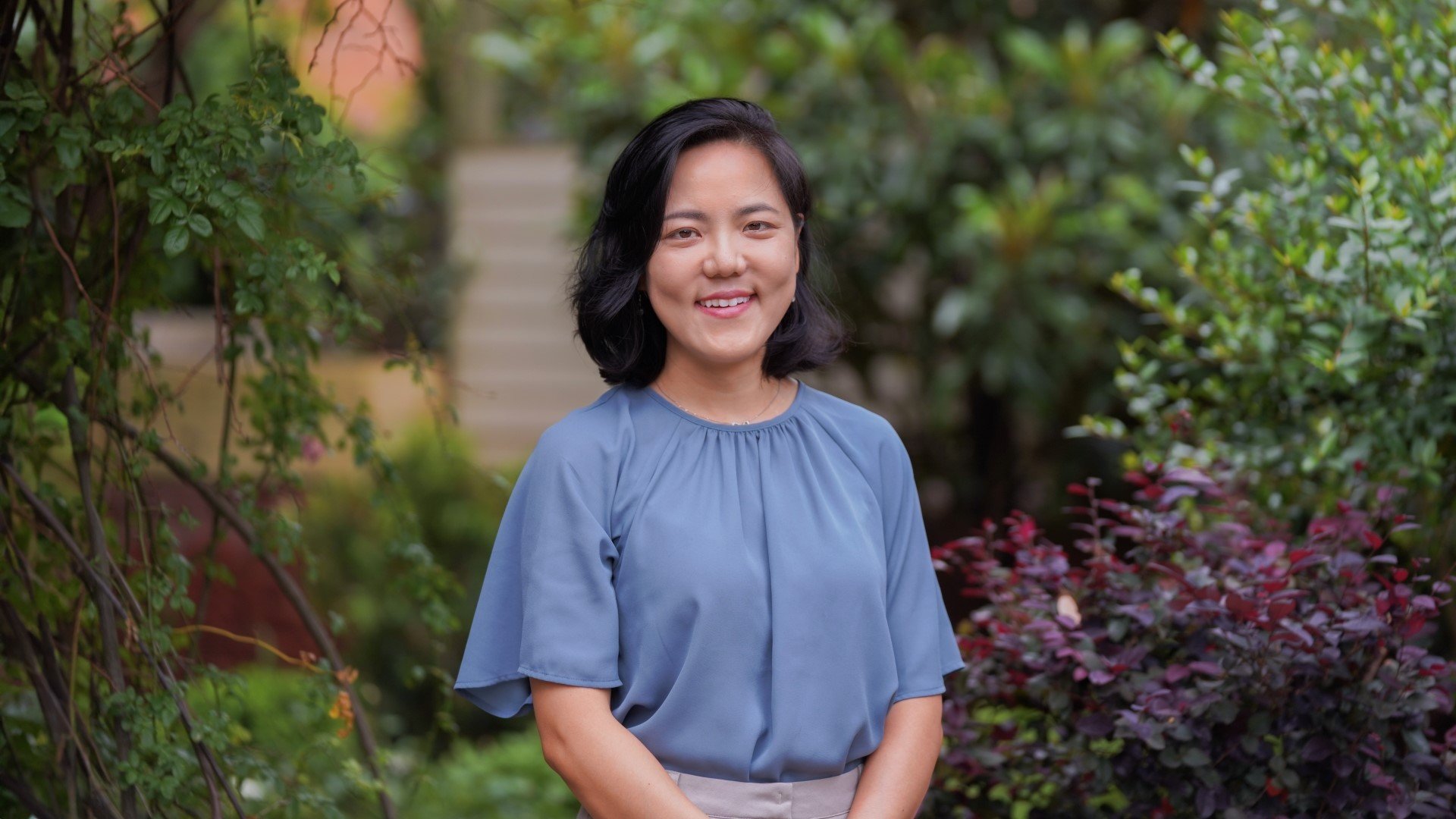
By: Jooyeon Hwang, PhD, associate professor at UTHealth Houston School of Public Health, and principal investigator of the Texas Firefighter Cancer Study. All quotes should be attributed to her.
For media inquiries or if you would like to submit future health topics: [email protected] or 713-500-3030